PET vs. PLA (Bioplastic): Choosing the Right Eco-Friendly Cup
Many businesses are torn between traditional Recyclable PET and Biodegradable PLA (Polylactic Acid/Corn Starch) cups. While PLA sounds like the perfect eco-solution, the reality is nuanced. For many businesses, Recyclable PET remains the more practical and truly sustainable choice depending on your local waste infrastructure.
●
The PLA Reality: PLA is compostable, but only in industrial composting facilities. It will not decompose in a landfill or in a home compost bin. If a customer throws a PLA cup into a regular recycling bin, it contaminates the PET recycling stream because they look identical but melt at different temperatures. Since many cities lack industrial composting pickup, PLA often ends up in landfills where it behaves like regular plastic.
●
The PET Advantage: PET relies on the existing recycling infrastructure. Consumers know to put plastic bottles and cups in the recycling bin. Because the system to process PET already exists everywhere, the likelihood of a PET cup actually being recycled is often higher than a PLA cup finding a commercial composter.
Performance Comparison
✔
Heat Sensitivity: PLA is very sensitive to heat and can melt in a hot car or storage truck (above 40°C). PET is more stable for general storage.
✔
Cost: PET is generally more cost-effective than PLA.
Unless you have a "closed-loop" system (like a festival where you collect all trash for a specific compost facility), PET is often the more logical and robust environmental choice for general retail.
Frequently Asked Questions
Q1: Is PLA better for the environment than PET?
It depends on the infrastructure. While PLA is bio-based, it requires industrial composting. In many regions where industrial composting is unavailable, PET is often more sustainable because it can be easily recycled through existing curb-side programs.
Q2: Can I put PLA cups in my home compost bin?
No, PLA cups will not decompose in a home compost bin. They require the high, sustained heat of an industrial composting facility to break down properly.
Q3: Why shouldn't PLA and PET be recycled together?
They melt at different temperatures. If PLA enters the PET recycling stream, it acts as a contaminant, potentially ruining the entire batch of recycled plastic.
Q4: At what temperature do PLA cups start to deform?
PLA is heat-sensitive and can begin to warp or melt at temperatures above 40°C (104°F), making it risky for transport in hot climates without climate control.
Q5: Is PET plastic BPA-free?
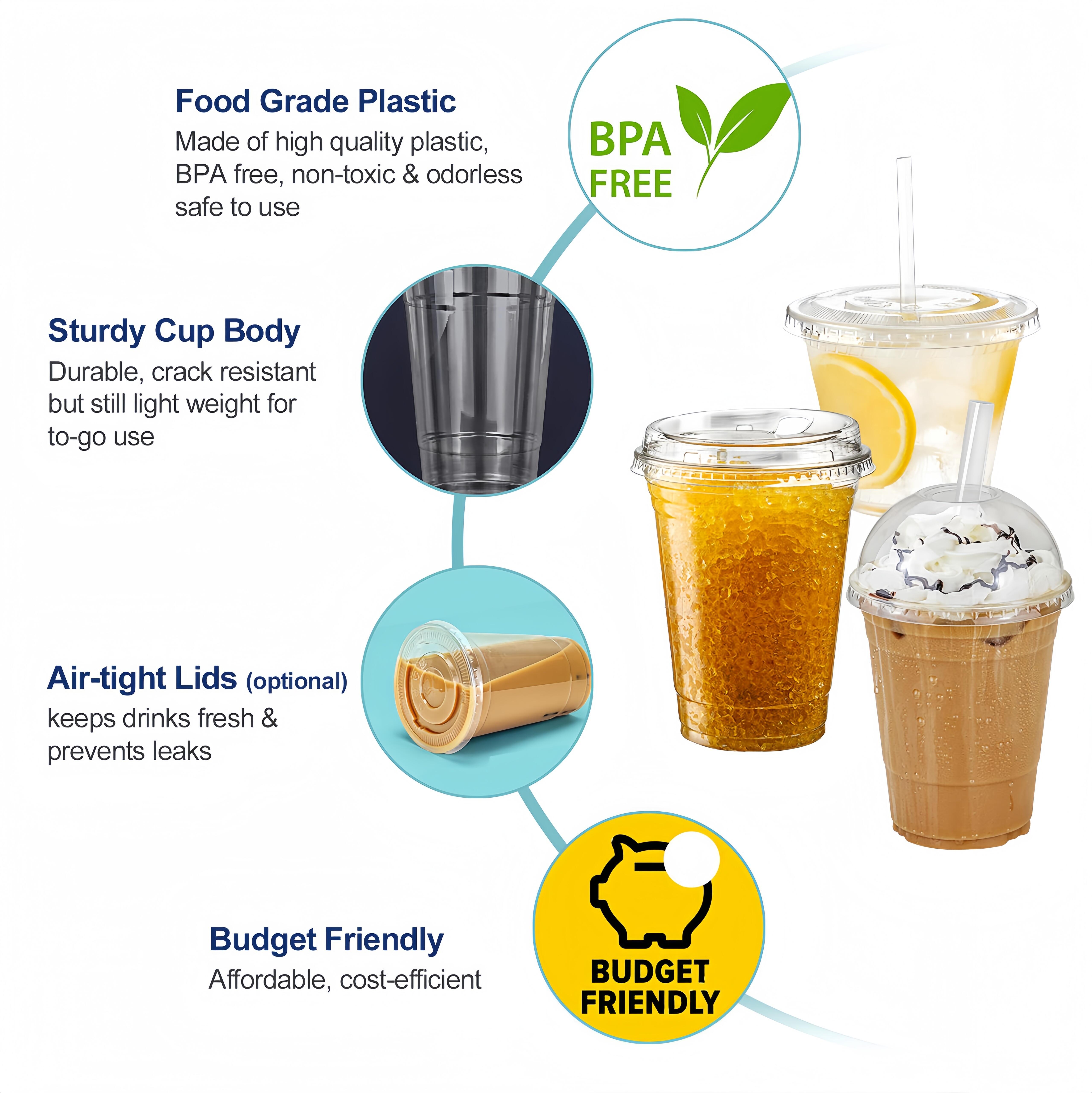
Yes, PET (Polyethylene Terephthalate) is a safe, non-toxic material that is naturally BPA-free, making it a standard choice for food and beverage packaging.
Q6: Which cup is more affordable for small businesses?
PET cups are generally more cost-effective due to the established manufacturing processes and material availability compared to PLA.