
1 / 3

Q: Why do PET cans for carbonated drinks require a reinforced (petaloid) base?
For carbonated soft drinks (CSD), a specialized reinforced base—often called a "petaloid" or "concave" base—is strictly necessary due to the physics of internal pressure. Here is why:
Carbonated beverages contain dissolved CO2, creating significant internal pressure (often 30–60 psi or 2–4 bar). According to physics, pressurized vessels naturally try to expand into a spherical shape. Without a reinforced design, a flat bottom would bulge outward (deform), becoming round and unstable. The reinforced base utilizes an arch structure to distribute this vertical pressure evenly across the can walls and ribs, maintaining structural integrity.

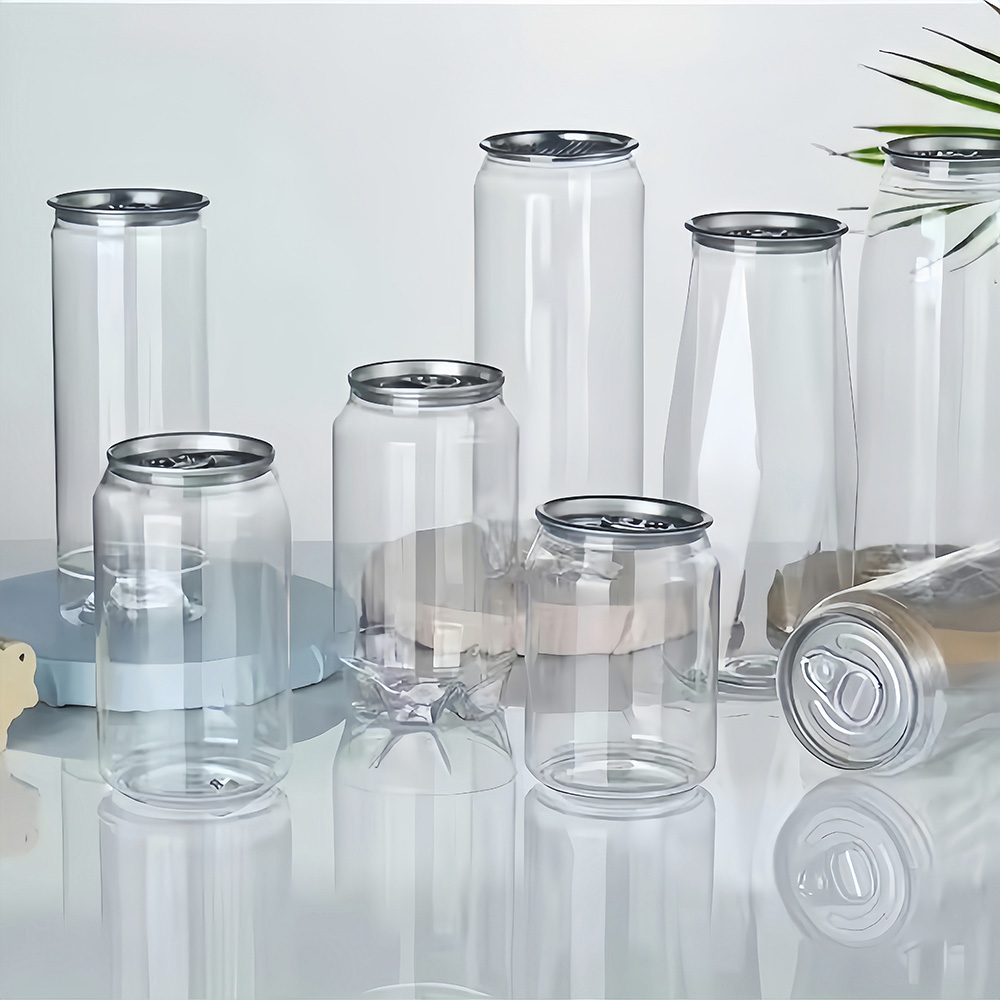
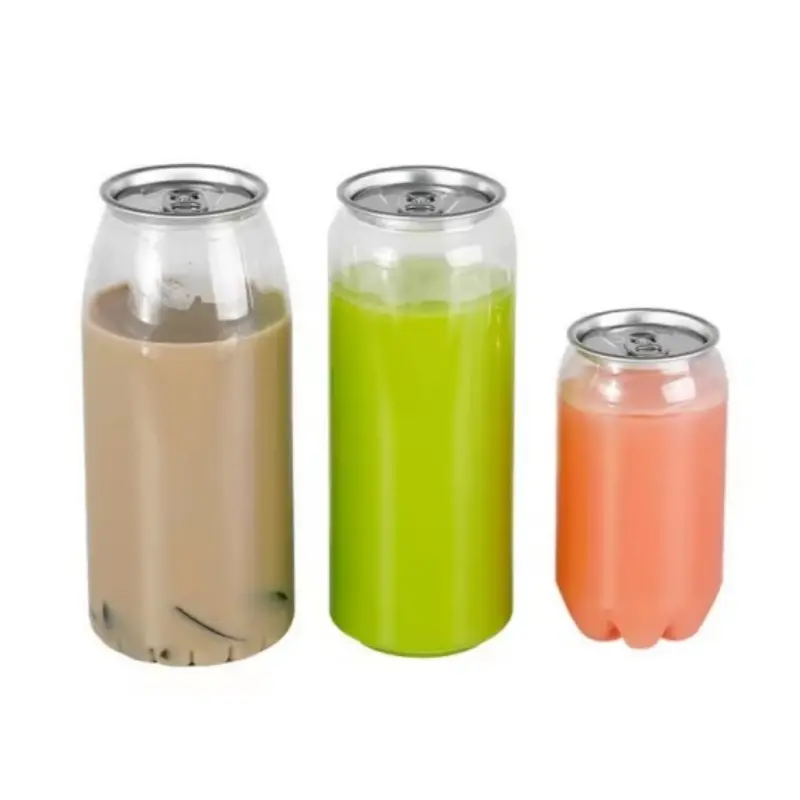
If the base bulges, the can loses its ability to stand upright. The petaloid design provides multiple independent feet (support points). Even if the center of the base expands slightly under high pressure, these feet remain level, ensuring the can stands perfectly stable on filling lines, conveyor belts, and retail shelves.
Long-term exposure to high pressure can cause "environmental stress cracking" in PET. The complex geometry of our reinforced base effectively disperses stress away from the injection gate (the center point), significantly reducing the risk of leaks or bursts during storage.
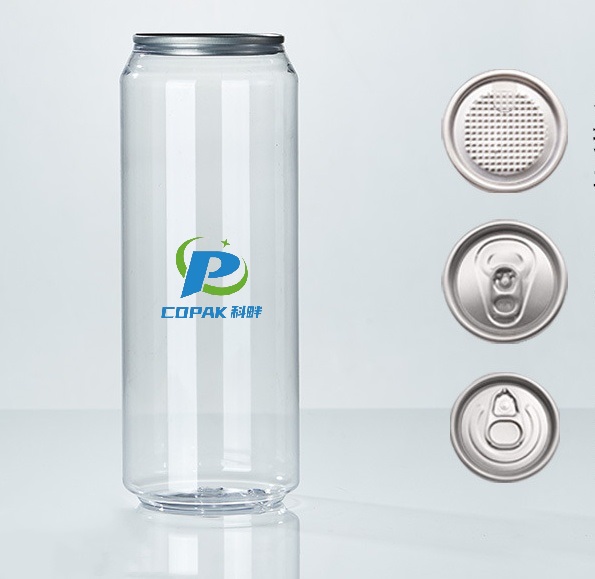
Pressurized cans are vulnerable during transport. The reinforced structure acts as a shock absorber. In the event of a drop, the base geometry absorbs and dissipates the impact energy, preventing the can from shattering or exploding.
Packaging safety is paramount for carbonated beverages. Our PET cans feature a precision-engineered Reinforced Petaloid Base to protect your brand: