Clear Jar packaging has become a familiar choice for buyers across many international markets. Its transparent walls let customers see the product before purchase. This simple feature can build confidence on crowded retail shelves and online product pages. It also helps brands display color, texture, and fill level clearly. In practical sourcing work, visibility often makes product comparison easier.
Global buyers value more than appearance, however. They examine glass or plastic quality, closure performance, wall thickness, and surface consistency. A reliable Clear Jar should arrive without cracks, distortion, sharp edges, or loose lids. Export buyers also review packaging tests, supplier records, labeling needs, and transport performance. Small details matter when thousands of units travel through warehouses and long-distance shipping routes.
The choice is not always obvious. Transparent packaging may reveal dust, discoloration, or uneven filling more easily. It can also require stronger protection from light, depending on the product. Responsible suppliers should discuss these limitations instead of promising universal benefits. Buyer preferences vary by market, product category, budget, and sustainability goals. Recyclability, reusable design, and material sourcing deserve careful review. These factors can influence both customer trust and long-term operating costs.
This article explores why Clear Jar packaging remains popular with global buyers. It considers practical performance, visual merchandising, quality expectations, and responsible purchasing decisions. The goal is not to present one perfect solution. It is to explain where this format performs well, where it needs improvement, and how informed buyers can evaluate it with greater confidence.
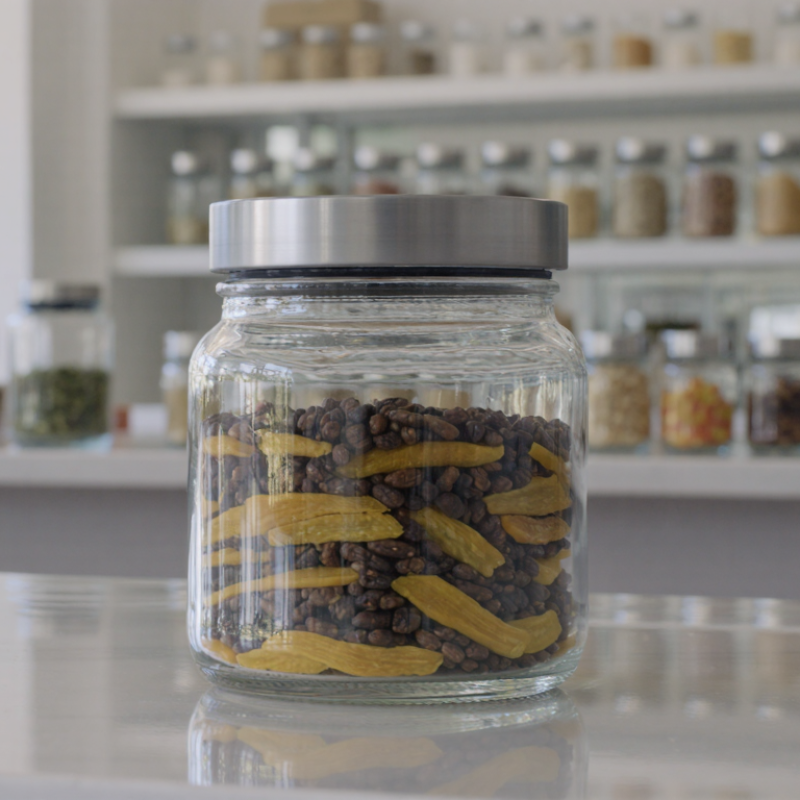
Clear jars are transparent containers made from glass or food-grade plastic. They hold food, cosmetics, spices, sauces, supplements, and craft materials worldwide. Their visibility helps buyers inspect color, texture, fill level, and cleanliness before purchase. This simple feature supports trust in crowded retail aisles and online product photography.
Glass remains important because it is rigid, chemically stable, and widely accepted for recycling. Grand View Research valued the global glass packaging market at more than US$75 billion in 2023. Its report also expects steady growth through 2030. Smithers’ packaging forecasts identify convenience, premium appearance, and product protection as continuing market drivers. However, clear jars are not automatically better. Sunlight can damage oils, vitamins, and natural colorants. Plastic jars reduce transport weight, but their recycling results vary by material and local infrastructure.
Tips: Match the jar to the product, not only the shelf design. Test closure tightness, drop resistance, and light exposure. Leave enough headspace for filling changes. A clear jar may look attractive, yet a tinted or opaque option can protect sensitive contents more effectively. Food-contact compliance and accurate labeling still matter across markets. Small suppliers sometimes overlook these details. That mistake can weaken an otherwise strong package.
Why Are Clear Jars Popular with Global Buyers?
Product visibility strongly influences how shoppers judge quality, freshness, and quantity. A clear jar lets buyers inspect texture, color, fill level, and possible damage before purchase. This matters on crowded shelves and online product pages.
The 2018 Label Insight Transparency ROI Study reported that 73% of shoppers would pay more for complete product transparency. Its findings focused on ingredient and product information, not jars alone. Still, the principle applies: visible evidence can reduce uncertainty. Nielsen’s 2018 Global Brand-Origin Survey also found that consumers increasingly valued trust and clear product information when making purchases. A visible product supports that expectation without adding another claim to the label.
In practical packaging tests, buyers often tilt a jar under store lighting. They check whether the contents look consistent from top to bottom. A wide opening and clean walls can make that inspection easier. Clear glass also photographs naturally, which helps online shoppers compare products across countries.
But visibility is not automatically persuasive. Poor lighting, fingerprints, uneven filling, or excessive empty space can create doubt. I have seen attractive jars lose credibility because the product looked smaller than expected. That is a useful warning. Transparency must be supported by accurate labeling, stable packaging, and honest images.
The evidence has limits. Much published research measures transparency attitudes, not clear-jar sales directly. More product-specific testing is still needed.
Clear jars are practical when their materials match the product and handling conditions. Glass offers strong chemical resistance, a clean appearance, and reliable protection against odors. It also feels substantial in the hand. However, glass is heavier and can break during transport or filling. Clear PET provides lower weight and better impact resistance, making it useful for many household, food, and personal-care products. Its transparency is good, but heat exposure can affect its shape.
Design details often decide whether a jar works well in daily use. A wide mouth helps users remove thick creams, grains, or powders without scraping the sides. Smooth inner walls reduce residue and make cleaning easier. A stable base lowers the risk of tipping on shelves or kitchen counters. Threaded closures should fit evenly, while liners can help reduce leakage and preserve freshness. Some designs need tamper-evident features for safer retail handling.
A clear jar is not automatically practical. Strong light may affect sensitive contents, and a narrow neck may frustrate users. Testing should include drops, temperature changes, closure cycles, and repeated opening. In real production, small differences in wall thickness can affect both strength and appearance. Designers sometimes focus too much on visual clarity. That choice may need reconsideration when durability, recycling, or transport efficiency matters more.
Why Are Clear Jars Popular with Global Buyers?
How Clear Jars Support Branding, Storage, and Retail Display
Clear jars make product details visible before purchase. Shoppers can inspect color, texture, fill level, and consistency without opening the container. This supports honest branding and reduces uncertainty on crowded shelves. Smithers’ The Future of Global Packaging to 2028 estimates that the worldwide packaging market could reach about 1.33 trillion dollars by 2028. In this expanding market, simple visual differentiation matters. A clear jar creates a clean display block, while a carefully placed label communicates origin, usage, and storage information.
Storage performance still needs attention. Glass provides strong resistance to moisture and odors, helping protect many dry and liquid products. FEVE consumer research reported that 90% of European respondents considered glass suitable for preserving food and beverages. That perception can strengthen retail confidence. A wide mouth also allows easier filling, cleaning, and product access. Useful details. However, clear glass does not block light well. Light-sensitive contents may require sleeves, cartons, or tinted components. Otherwise, visibility can become a weakness. A clear surface may also reveal uneven fills, sediment, or minor production variation. That is not always attractive, but it encourages better quality control. Retail success depends on more than appearance; jar shape, closure reliability, transport weight, and shelf handling must work together.
| Business Dimension | Measured Factor | Typical Data or Packaging Fact | How Clear Jars Create Value | Practical Buying Consideration |
|---|---|---|---|---|
| Branding | Product visibility | 360-degree visibility is possible when the jar has transparent walls and the label does not fully cover the container. | Buyers can see the product color, texture, fill level, and consistency before purchase. | Use clear walls for products where appearance supports quality perception; use opaque or tinted packaging for light-sensitive contents. |
| Branding | Visible light transmission | Standard clear glass commonly transmits approximately 90% of visible light at typical thin-glass thicknesses; actual transmission varies with thickness and composition. | High transparency helps preserve the visual identity of colorful foods, cosmetics, candles, and decorative products. | Confirm the jar wall thickness and optical clarity when appearance is a key selling factor. |
| Branding | Label flexibility | Clear jars can support pressure-sensitive labels, wrap-around labels, paper labels, and directly printed decoration. | The transparent surface provides a neutral background that can work with multiple packaging designs and seasonal artwork. | Check label adhesion, condensation resistance, label position, and the visible area after filling. |
| Storage | Moisture and oxygen barrier | Glass is an effective barrier to oxygen, water vapor, and other gases under normal storage conditions. | Barrier performance helps protect aroma, flavor, dryness, and product stability when the closure is properly selected. | Evaluate the complete package, because the closure, liner, seal, and headspace also affect shelf life. |
| Storage | Chemical interaction | Food-grade glass is generally chemically stable and does not readily absorb food flavors or odors. | This supports product purity and makes jars suitable for foods, sauces, spices, personal-care products, and household goods. | Confirm compatibility with acidic, alkaline, oily, alcoholic, or fragranced contents before production. |
| Storage | Reusable packaging potential | Rigid glass jars can be washed and reused when their condition, design, and local safety requirements allow it. | Reuse can support refill systems, pantry organization, craft applications, and longer consumer use. | Provide guidance for cleaning, temperature changes, closure replacement, and safe reuse. |
| Sustainability | Recyclability | Glass is recyclable without a theoretical loss of material quality, although actual recycling depends on local collection and processing systems. | Clear jars can fit recycling-oriented packaging strategies and circular-material programs. | Design for local recycling rules and avoid unnecessary components that are difficult to separate. |
| Retail Display | Common capacity options | Common jar capacities include approximately 100 ml, 250 ml, 500 ml, and 1,000 ml, with additional sizes available for specific applications. | A broad capacity range supports sample packs, everyday-use formats, family sizes, and gift sets. | Match capacity to product usage, shelf height, shipping weight, and expected purchase frequency. |
| Retail Display | Shelf presentation | Transparent packaging allows inventory levels and product condition to remain visible during display. | Visible contents can reduce uncertainty and make the product easier to recognize on crowded shelves. | Use consistent jar shapes and label placement to create a clean, organized product row. |
| Retail Display | Product protection | Glass provides strong rigidity and does not deform easily under normal shelf conditions, but it is more brittle and heavier than many plastic alternatives. | Rigid walls help maintain a premium appearance and protect the package from ordinary compression during display. | Consider dividers, protective cartons, pallet configuration, and transport testing to manage breakage risk. |
| Retail Display | Tamper evidence | Clear jars can be paired with shrink bands, breakable caps, induction seals, or other tamper-evident closures. | A visible seal can communicate package integrity and increase shopper confidence. | Select a closure and seal that match the jar finish, filling process, product type, and applicable regulations. |
| Storage & Display | Light sensitivity limitation | Clear glass provides limited protection from ultraviolet and visible light compared with amber, green, or opaque packaging. | Transparency benefits presentation but may reduce protection for products affected by light exposure. | Use light-stable formulas, secondary packaging, tinted glass, or opaque decoration when light protection is required. |
Note: Specifications are typical industry guidance. Actual performance depends on jar material, wall thickness, closure system, filling process, product formulation, transport conditions, and local recycling infrastructure.
Clear jars attract global buyers because they make products visible before purchase. However, appearance should not lead the decision. Buyers must check the jar’s material, wall thickness, closure, and intended use. Glass offers strong clarity and a premium feel, but it can break during transport. Plastic is lighter and safer for shipping, yet some types may scratch or cloud over time.
Product compatibility needs careful testing. Oils, acids, alcohol-based formulas, and high-moisture contents can react differently with packaging materials. Request sample jars, closure liners, and leakage tests before placing a large order. Check the inner diameter, filling volume, neck finish, and label area with actual production tools. A jar that looks suitable online may feel too narrow during filling. That mistake is common. Also review supplier quality records, material declarations, and batch consistency. Requirements may vary by destination, so local packaging and recycling rules deserve professional confirmation.
Tips: Place a filled sample near a window for several weeks. Watch for discoloration, warping, leaks, or fading labels. Test the closure after repeated opening and closing. Consider shipping cartons, pallet weight, and breakage rates, not only the unit price. Clear packaging can expose scratches and uneven surfaces, so inspect samples under bright light. I would also leave room for revision; the first sample is useful, but it is rarely perfect.
They let shoppers inspect color, texture, fill level, and consistency before opening. This can reduce uncertainty on crowded shelves.
Glass resists odors and chemicals well, while PET is lighter and more impact-resistant. The product and handling conditions should decide.
Glass is heavy and may break during filling or transport. That increases handling demands and shipping risk.
Clear PET works well when low weight and impact resistance matter. However, heat exposure can change its shape.
A wide mouth helps users remove creams, grains, or powders without scraping the sides. It also simplifies filling and cleaning.
Evenly fitted threaded closures can improve sealing. Liners may reduce leakage and help preserve freshness.
Not by themselves. Strong light may damage sensitive contents, so sleeves, cartons, or tinted parts may be needed.
Testing should include drops, temperature changes, closure cycles, and repeated opening. Small wall-thickness differences deserve attention too.
No. Clear surfaces may reveal sediment, uneven fills, or production variation. Appearance matters, but durability and transport efficiency may matter more.
Their transparent walls create a clean display block. A well-placed label can explain origin, usage, and storage details. Not perfect, but useful.
Clear jars are widely used across global markets for packaging food, cosmetics, household products, crafts, and other everyday goods. Their transparent construction allows buyers to see the product’s color, texture, quantity, and condition before purchase, creating a sense of trust and making comparison easier. This product visibility is especially valuable in retail environments, where attractive contents can capture attention and encourage informed buying decisions. A Clear Jar can also support organized storage at home, in stores, or during transportation.
Practical clear jars are commonly made from durable glass or lightweight, impact-resistant plastic, with designs that may include screw caps, wide openings, airtight seals, or stackable shapes. Buyers should consider material safety, durability, capacity, closure quality, shipping weight, environmental impact, and compatibility with the product being stored. They should also evaluate how the jar’s shape and transparency support labeling, branding, shelf presentation, and long-term usability. Choosing the right clear jar can balance appearance, protection, convenience, and cost.
