The 2026 packaging market is moving toward lighter, recyclable, and visibly responsible beverage formats. A Rpet Plastic Soda Can combines recycled PET resin with a can-like silhouette, offering brands a different answer to traditional aluminum and virgin plastic. The category remains young. That matters.
According to the OECD’s Global Plastics Outlook, global plastic waste could nearly triple by 2060 without stronger intervention. The report also highlights major gaps in collection and recycling infrastructure. NAPCOR’s 2023 PET Bottle Recycling Report recorded a 29.9% PET bottle recycling rate in the United States. These figures show both opportunity and limitation. Recycled content is valuable, but collection quality still controls the result.
Global buyers should therefore examine more than appearance or resin percentage. A reliable Rpet Plastic Soda Can needs documented post-consumer recycled content, stable wall thickness, secure seams, and suitable barrier performance. Food-contact compliance must be verified for the destination market. Testing should include pressure resistance, drop performance, carbonation retention, and heat exposure. Small failures become expensive during pallet handling.
The Ellen MacArthur Foundation continues to emphasize design for recycling, material circularity, and transparent reporting. Those principles are practical here. Buyers should request traceability records, third-party laboratory results, and clear end-of-life guidance. Supplier claims deserve careful questions. A greener-looking package is not automatically a greener package.
This guide reviews the top types expected to attract global buyers in 2026. It compares clear and colored formats, recycled-content levels, closure options, and commercial applications. Some conclusions may change as recycling systems improve. That uncertainty should remain visible. Packaging decisions need evidence, not attractive assumptions.
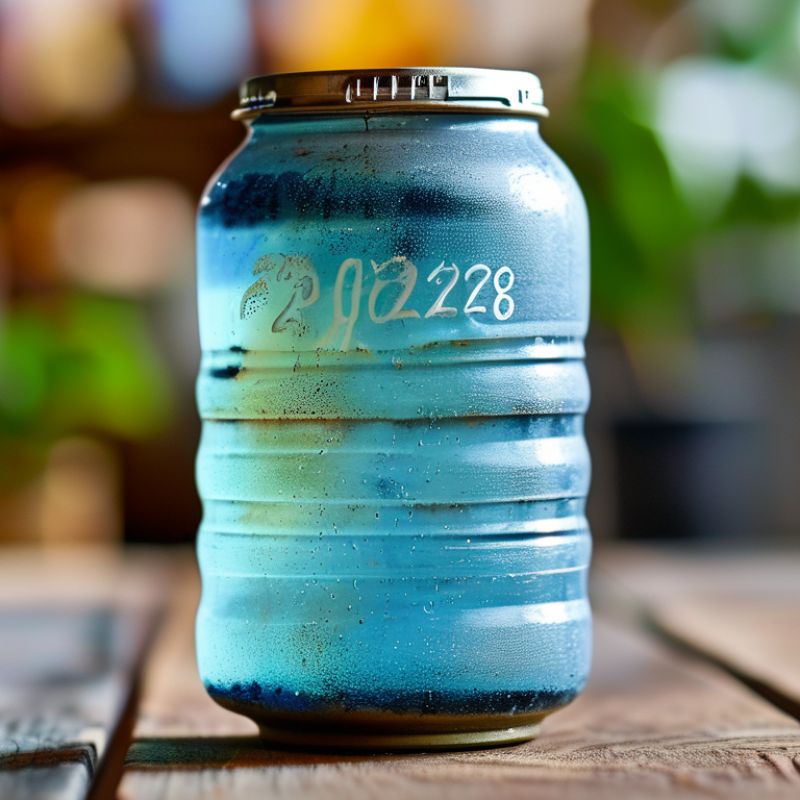
RPET plastic soda cans are rigid, can-shaped containers made partly or entirely from recycled polyethylene terephthalate. They are lightweight, transparent, and resistant to carbonated pressure. Unlike aluminum cans, they rely on polymer structure, wall thickness, and closure design for strength. The OECD Global Plastics Outlook reports that only 9% of global plastic waste was recycled in 2019. That gap explains the growing interest in RPET packaging.
Production begins with collected PET bottles and containers. Sorting equipment separates PET from caps, labels, colors, and other plastics. The material is then washed, shredded into flakes, dried, and melted. Extrusion converts the melt into pellets or sheet. Manufacturers may use injection molding, stretch blow molding, or thermoforming to create soda can bodies. Food-contact applications require controlled decontamination and traceable processing. The Association of Plastic Recyclers emphasizes material identification, clean feedstock, and package design for successful recycling.
RPET cans usually appear in three forms: clear single-layer containers, colored containers, and multilayer structures with barrier layers. Clear formats show the beverage clearly. Barrier designs can better protect carbonation and flavor. Yet, the process is not perfectly circular. Dark pigments, adhesives, and mixed materials may reduce future recyclability. A high recycled-content percentage can also hide inconsistent feedstock quality. Practical testing matters. One weak seam can become a costly failure.
| Item / Type | What It Is | Typical Application | Typical Recycled PET Content | How It Is Made | Key Performance Characteristics | Important Buyer Checks |
|---|---|---|---|---|---|---|
| Terminology clarification | RPET, also written as rPET, is polyethylene terephthalate recovered from used PET products and processed into new material. | Most commonly used for bottles, jars, trays, sheets, fibers, and other PET packaging formats. | Not applicable | Used PET is collected, sorted, washed, shredded into flakes, reprocessed into pellets, and converted into a new product. | A conventional soda can is normally made from aluminum or steel. “RPET plastic soda can” usually refers to a can-shaped PET container or a PET bottle designed with a can-like appearance. | Confirm whether the product is actually PET, a metal can, or a composite package before comparing specifications. |
| Clear RPET beverage bottle | Transparent recycled PET packaging designed for carbonated or non-carbonated beverages. | Soft drinks, sparkling water, flavored water, and ready-to-drink beverages. | Commonly 25%–100%, depending on local regulations, product requirements, and the availability of food-grade recycled resin. | RPET pellets are dried, melted, injection-molded into preforms, and stretch blow-molded into bottles. Carbonation-rated designs require suitable preform and bottle geometry. | Lightweight, transparent, shatter-resistant, and suitable for high-speed filling. PET provides useful carbon-dioxide retention when properly designed. | Check food-contact approval, intrinsic viscosity, acetaldehyde control, color, haze, bottle top-load strength, pressure resistance, and closure compatibility. |
| Can-shaped RPET container | A PET container with a cylindrical, can-like profile. It is not a metal can and normally uses a PET-compatible closure or seal. | Single-serve beverages, promotional packs, functional drinks, and products requiring a distinctive shelf appearance. | Often 25%–100%, subject to the same food-contact and performance limitations as other food-grade RPET packaging. | Recycled PET is converted into preforms or thick-wall blanks and then stretch blow-molded. The neck finish and closure system are designed specifically for the container. | Can provide PET transparency and impact resistance while offering a different shape from a standard bottle. It may not match the pressure performance or opening experience of a metal can. | Verify internal pressure rating, seal integrity, drop performance, filling temperature, label fit, and whether the closure is recyclable with the container. |
| RPET bottle-to-bottle grade | High-purity recycled PET intended to be converted into new PET beverage packaging. | Food and beverage bottles where closed-loop or bottle-to-bottle sourcing is required. | Can reach 100% recycled PET in suitable designs, although caps, closures, labels, and colorants are normally made from different materials. | Post-consumer PET is sorted by polymer and color, washed, processed into flakes or pellets, and subjected to approved decontamination and solid-state or equivalent processing where required. | Can provide properties close to virgin PET when purification, drying, and processing are properly controlled. | Request a recycled-content declaration, food-contact documentation, migration test results, lot traceability, color specification, and contaminant-control information. |
| Colored or opaque RPET container | RPET packaging containing approved colorants, pigments, or barrier additives that reduce transparency. | Flavored beverages, specialty drinks, household products, and applications where light protection or a specific appearance is needed. | Commonly 25%–100%, depending on the color system and application. | Color concentrates or additives are compounded with RPET before injection molding and blow molding, or added during a controlled conversion process. | Can improve light protection and visual differentiation. Dark or highly colored PET may be less suitable for conventional clear-PET recycling streams. | Check recyclability in the destination market, color sorting compatibility, additive declarations, UV performance, and whether the color affects recycled-resin yield. |
| RPET thermoformed sheet or tray | Flat or formed PET sheet containing recycled PET, converted by heating and forming rather than bottle blow molding. | Multipacks, food trays, lids, inserts, and secondary packaging for beverage products. | Frequently 30%–100%, depending on clarity, forming depth, food-contact requirements, and sheet quality. | RPET pellets are extruded into sheet, cooled, reheated, and formed over a mold by vacuum or pressure. The finished part is trimmed and inspected. | Good stiffness, transparency options, and dimensional consistency. It is not normally used as the primary pressure container for carbonated drinks. | Check sheet gauge, forming ratio, sealability, tray stiffness, food-contact status, trim-recycling practice, and compatibility with existing forming equipment. |
| Non-food-grade RPET container | Recycled PET packaging produced for applications that do not require direct food contact. | Detergents, personal-care products, industrial liquids, cleaning products, and general-purpose containers. | Commonly 50%–100%, depending on appearance and mechanical requirements. | RPET flakes or pellets are dried and processed by injection molding, extrusion blow molding, or stretch blow molding. | Usually offers a lower regulatory burden than food packaging, with good stiffness and chemical resistance for many everyday products. | Confirm chemical compatibility, stress-cracking resistance, odor, color variation, wall thickness, and destination-market labeling requirements. |
| Standard RPET manufacturing workflow | The general supply-chain process used to make recycled PET packaging. | Applies to bottles, can-shaped containers, sheets, trays, and other PET formats. | Depends on the selected resin grade and the target recycled-content claim. |
|
Product quality depends strongly on contamination control, moisture management, resin viscosity, mold design, and processing temperature. | Request specifications for moisture, intrinsic viscosity, color, black specks, contamination, recycled content, batch consistency, and quality-testing frequency. |
| Global buyer compliance checklist | Commercial and technical information needed before approving an RPET beverage package. | International sourcing, private-label packaging, contract filling, and cross-border distribution. | Must be supported by a documented mass-balance or physical recycled-content method, according to the applicable claim standard. | Supplier documentation should connect recycled resin production, packaging conversion, testing, and shipment identification through traceable batch records. | Reduces the risk of non-compliant recycled-content claims, inconsistent appearance, and filling-line problems. |
|
: They are rigid, can-shaped containers made partly or entirely from recycled PET. They are lightweight, clear, and designed to hold carbonated drinks. Unlike metal cans, they depend on wall thickness and closure strength. They are not perfect.
Used PET bottles are collected, sorted, washed, shredded, dried, and melted. The melted material becomes pellets or sheets. Manufacturers then use molding or thermoforming to create the can body. Controlled decontamination is essential for food contact.
Common sizes include 250 ml, 330 ml, and 500 ml. Slim shapes fit vending machines and narrow refrigerator spaces. Wide-mouth designs make pouring and cleaning easier. They may need stronger rims.
Pull-tab lids create a familiar can-like experience. Screw caps allow repeated opening and controlled pouring. Both require seal checks, torque testing, and pressure testing. A strong closure may complicate recycling.
Clear RPET shows the beverage and usually supports easier material sorting. Tinted containers can protect drinks from light. Dark pigments may reduce recycling value. Appearance alone proves little.
RPET can be recyclable, but the whole package matters. Adhesives, labels, sleeves, pigments, and mixed layers can hinder sorting. Some designs may lose value after repeated recycling. The cycle is imperfect.
Request food-contact documentation, migration test results, and material specifications. Ask for batch traceability and technical drawings. Check closure fit, neck dimensions, and carbonation resistance. Paperwork helps, but samples still need practical testing.
Run filling, leakage, pressure, drop, and hot-storage tests. Inspect seams, rims, labels, and cap fit. A sample may pass laboratory testing but fail in a warm warehouse. Small trials reveal expensive problems.
An Rpet Plastic Soda Can is a lightweight packaging option made by processing recovered PET materials into food-contact containers designed for carbonated beverages. This article explains how these cans are produced, from material sorting and cleaning to pelletizing, forming, and quality inspection. It also compares major can types by shape, capacity, and closure, helping buyers understand how design choices affect filling efficiency, portability, sealing performance, and consumer convenience.
For global buyers, selecting the right RPET grade requires attention to clarity, strength, barrier performance, temperature resistance, and recycled-content consistency. The article also highlights safety, sustainability, traceability, labeling, recycling symbols, and international compliance considerations. By evaluating beverage type, market preferences, transportation conditions, filling methods, and local packaging requirements, importers and manufacturers can choose an RPET soda can that balances product protection, environmental goals, production reliability, and cost efficiency across different regions.
